Course and Project Takeaways

Hey guys, so this is my final blog post, and as a good way to wrap things up I’ll be talking about the most memorable things I’ve learned in this course.

So although I was only in the classroom for about half of the Spring semester (you can thank Corona for that), and online for the other half, I still think that I’ve been able to learn a lot from Strategic Presentation throughout my time taking it. One of the first and more prominent things I think I’ve learned to do, was create my own website. I put such a high regard on this because I think that having your own website as something to represent you, or your interests, or whatever you want it to show-off, is a valuable skill, that can be used in so many of life’s situations, especially in an era where everything seems to be online. If you decide to start your own business in the future, or join a club, or just want to expand your interest in hobbies to other people, being able to create and edit your own website is a very useful and convenient skill.

As far as my final project goes, one important takeaway for me was being able to smoothly work across the web, editing programs, and websites to be able to upload not JUST my assignments, but valuable pieces of information that I could spread to others. Like creating a website, the things I’ve learned from making my own PSA and Podcast can be carried with me throughout the rest of my life. I know how to record my own voice, how to edit it (fade in and out), and how to add music while either bringing it up, or down. My knowledge is not just limited to PSAs or Podcasts either, audio editing software could come in handy if I ever wanted to make videos or even music (although I don’t think I’ll be recording myself singing any time soon), not to mention I now have the knowledge of how to download my creations, and then upload them to websites such as Soundcloud, Youtube, or even other projects of mine, like I did with the PSA and Podcast!

The last, and probably most prominent takeaway I’ve had from this course, and especially my final project, was how to navigate inconvenient and even difficult situations. Going online because Corona was unexpected to everyone, and having to work with a group that you hadn’t even met in person once, was difficult, especially when you’re attempting to coordinate podcasts, or divvy up the work on papers while also trying to make sure that everybody else is doing their part. This is especially true though, because it’s hard to know what’s going on in others’ lives because of the testing circumstances, and so by putting too much pressure on someone, you can potentially make a situation worse. So more than anything from all this, I’ve also learned a lot about how to work with teams, and that no strategy is universal; whether it’s the circumstances or team members changing, you have to be able to not only listen but work with your peers in ways that not only you, but they also appreciate.

I want to thank any readers for following my blog up to this point. It’s been fun expressing my thoughts and ideas on different topics, while also having an audience to listen. And although this may be my last assigned post, it doesn’t necessarily have to be my last, I mean who knows what the future holds for Pianotrek.Music.Blog, anything can happen!


Meme’s Blogpost

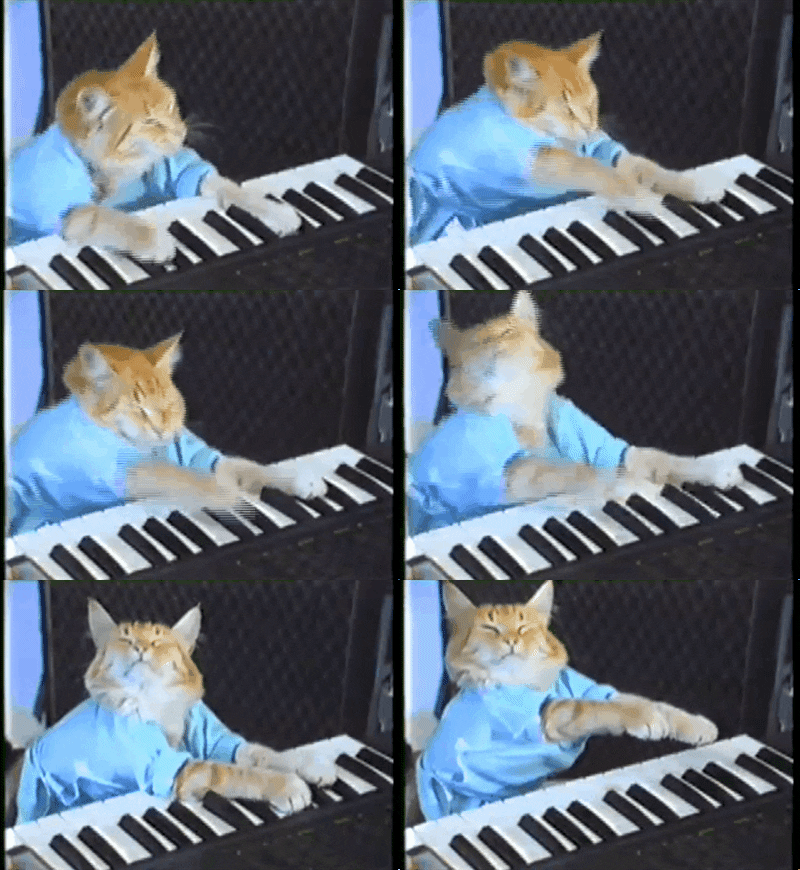
  1. The three memes I chose (which I will embed below with link) are, the keyboard cat video, tired Spongebob and crying Kardashian. I think the keyboard cat relates to my website topic of piano/re-learning piano fairly well, as thats how I sometimes feel when I practice a song long enough to get good at it, and I’m finally able to play it through. I think the tired Spongebob meme really expresses how I feel when I am either trying to re-learn or learn a hard song on Piano, and it requires more than five minutes of my time and effort. Lastly I think the crying Kardashian meme, is best representative of when I keep making the same mistake on a piano song, at the same spot, and cannot seem to fix it no matter how slow, or how many times I practice it. I think my audience can really connect to all these memes, as all of the experiences I noted are ones that all piano players usually go through at any level of piano playing.

2. So when looking at ideals of my memes, which means the”concept or ideas conveyed” (Mandiberg 123), it is apparent that we think cats playing instruments are funny (as keyboard cat is a really famous one), that Kim Kardashian is dramatic but also funny, and that Spongebob is funny, but also represents a strong piece of our generation.

3. The behaviors of my memes are all similar as they were all taken and uploaded to the internet, and were not edited past the original photography. The keyboard cat originated from “VHS footage” (knowyourmeme) of fatso the performing cat in 1984, the video was subsequently taken by the owner and uploaded to youtube in 2007. The video was not very popular until a famous youtuber put it in one of his videos, two years later, with the phrase, “play me off keyboard cat”. The tired Spongebob meme comes from a “Season 1 episode” (knowyourmeme) of Spongebob, the image was then taken from the episode, and put in a Twitter post, where somebody captioned the picture describing an action that takes very minimal effort, but feels like a lot. The post gained a lot of traction after it went viral and people started making their own versions of the memes which got even more popular than the original. The last meme of Kim Kardashian crying is not actually a specific meme on ‘knowyourmeme’, but is part of a broader group meme, simply known as, Kim Kardashian (lol). Kim Kardashian became so meme’d because she essentially “attained celebrity status for no particular identifiable reason” (knowyourmeme), as being dramatic does not usually justify getting celebrity status. The memes only kept getting more and more popular as her Tv show took off, and as her family was thrown into the spotlight from a wide array of public controversies.

4. All of these memes have the same manifestations in a sense, as none were essentially photo shopped, they are all just the “progression of pixels subsequently uploaded to the Internet” (Mandiberg 123). They can be differentiated though in manifestations, when looking at which parts of the internet they were uploaded to, and if anybody who receives these images on the internet decides to alter them and put them back up. (such as putting music behind the cat video). This can also apply to other memes in general as well, where putting music behind a vanilla video, can still change it’s manifestation completely. Now, if we’re talking about manifestations in other terms (such as how the images manifested in society itself, not just on the internet). We can see that all of the memes I chose, have a broad range of opportunities for humor, as they have all manifested into an explanation for emotions regarding a particular (but still broad) set of circumstances.

5. I think the specific manifestations I chose will really appeal to my audience as they can come to represent a wide variety of circumstances, that as piano players we experience, but are specific enough in nature to be humorous in any one of our situations. Furthermore I think the images I chose are appealing also because as a smaller community, (piano playing community) less people are inclined to understand the circumstances of which we find the jokes funny, hence being even more funny to those who understand it!

This image has an empty alt attribute; its file name is kim-k-crying.jpg
https://knowyourmeme.com/memes/people/kim-kardashian
This image has an empty alt attribute; its file name is 5abb9e6a3216741c008b462d.jpeg
https://knowyourmeme.com/memes/tired-spongebob
This image has an empty alt attribute; its file name is gif-kc.gif
https://knowyourmeme.com/memes/keyboard-cat

Red Cross Podcast!

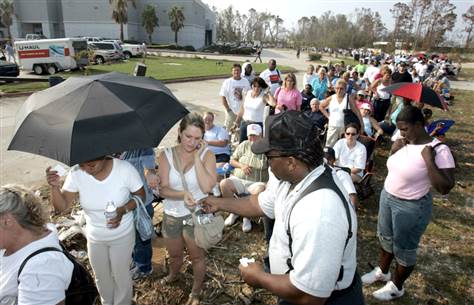
Hey guys, I just finished up my podcast about Hurricane Katrina and the Red Cross, I’ll post a link to it below so you can check it out. The podcast itself is a little longer than 7 minutes and is in a more educational style. I give full background on how bad the hurricane was, while also explaining what caused it/why. I also went over everything that the Red Cross did in the days after while they were providing relief to the millions who needed it. At one point in the podcast as well, I actually go over a photo taken after Katrina, which I think really encompasses the whole situation at that time, while also speaking to people on a level that words can’t describe-I’ll post it below so you can see it as well.

Overall though I really enjoyed making this podcast, it’s a topic that’s important to me, and I think it’s important that everybody can learn about what happened/why it happened, so for one, it dosen’t occur again, but also because it helps to portray the amount of pressure that was put on the Red Cross during this situation.

My group members did similar podcasts as well! They are all about natural disasters and the Red Crosse’s efforts, and you should definitely check them out!

Margaux Beck – https://articulation.photo.blog/blog-feed/

Ashley Granholm – https://americantouristinfo.wordpress.com/

Zou Yuming – https://scarletreptiles.wordpress.com/blog-feed/

Link to my podcast.
Picture that I talked about during my podcast.

Finally, here’s links/citation to all the information I cited during my podcast.

LINKS

http://www.redcross.org – Visit the Red Cross website here

https://freemusicarchive.org/ – Where I got all the music used in my podcast.

CITATIONAL INFORMATION TO SOURCES

Edwards, Chris. “Hurricane Katrina: Remembering the Federal Failures.” CATO INSTITUTE, 15 Aug. 2015, 2:56, www.cato.org/blog/hurricane-katrina-remembering-federal-failures.

“FEMA Faces Intense Scrutiny.” PBS NEWS HOUR, 9 Sep. 2005, 12:02, https://www.pbs.org/newshour/politics/government_programs-july-dec05-fema_09-09

Green, Rebekah. “Impediments to recovery in New Orleans’ Upper and Lower Ninth Ward: one year after Hurricane Katrina.”Disasters, Lisa Bates, Andrew Smyth, Vol.31 Issue 4, Dec 2007, p.311-335.EbscoHost,https://web.a.ebscohost.com/ehost/detail/detail?vid=0&sid=b03629d0-8bb1-4550-93de-d8eaab651a1e%40sdc-v-sessmgr06&bdata=JnNpdGU9ZWhvc3QtbGl2ZQ%3d%3d#db=aph&AN=27525402

Horowitz, Andy. “Hurricane Betsy and the Politics of Disaster in New Orleans’s Lower Ninth Ward, 1965-1967” Journal of Southern History, Vol.80 Issue 4, Nov 2014. P. 893-934. Ebscohost. https://web.b.ebscohost.com/ehost/detail/detail?vid=0&sid=3824e12c-b100-4571-abb5-4ee3b3bd76c5%40sessionmgr103&bdata=JnNpdGU9ZWhvc3QtbGl2ZQ%3d%3d#db=aph&AN=99329720

Seed, Raymond., et al. “New Orleans and Hurricane Katrina. II: The Central Region and the Lower Ninth Ward.” Journal of Geotechnical and Geoenvironmental Engineering, Vol.134 Issue 5, May 2008, p. N/A. ASCE Library, https://ascelibrary-org.proxy.libraries.rutgers.edu/doi/full/10.1061/%28ASCE%291090-0241%282008%29134%3A5%28718%29

Tibbetts, John. “Louisiana’s Wetlands: A Lesson in Nature Appreciation.” Environmental Health perspectives, vol. 114, no.1, Jan. 2006, A40-A43. PubMed Central, https://www.ncbi.nlm.nih.gov/pmc/articles/PMC1332684/.

Trouble the Water. Directed by Carl Deal, Tia Lessin. 2008.

Van Heeren, Ivor. “The Failure of the New Orleans Levee System Following Hurricane Katrina and the Pathway Forward.” Public Administration Review, Vol. 67 Issue S1, Dec 2007, p.24-35. Wiley Online Library, https://onlinelibrary.wiley.com/doi/full/10.1111/j.1540-6210.2007.00810.x

Thanks for reading!